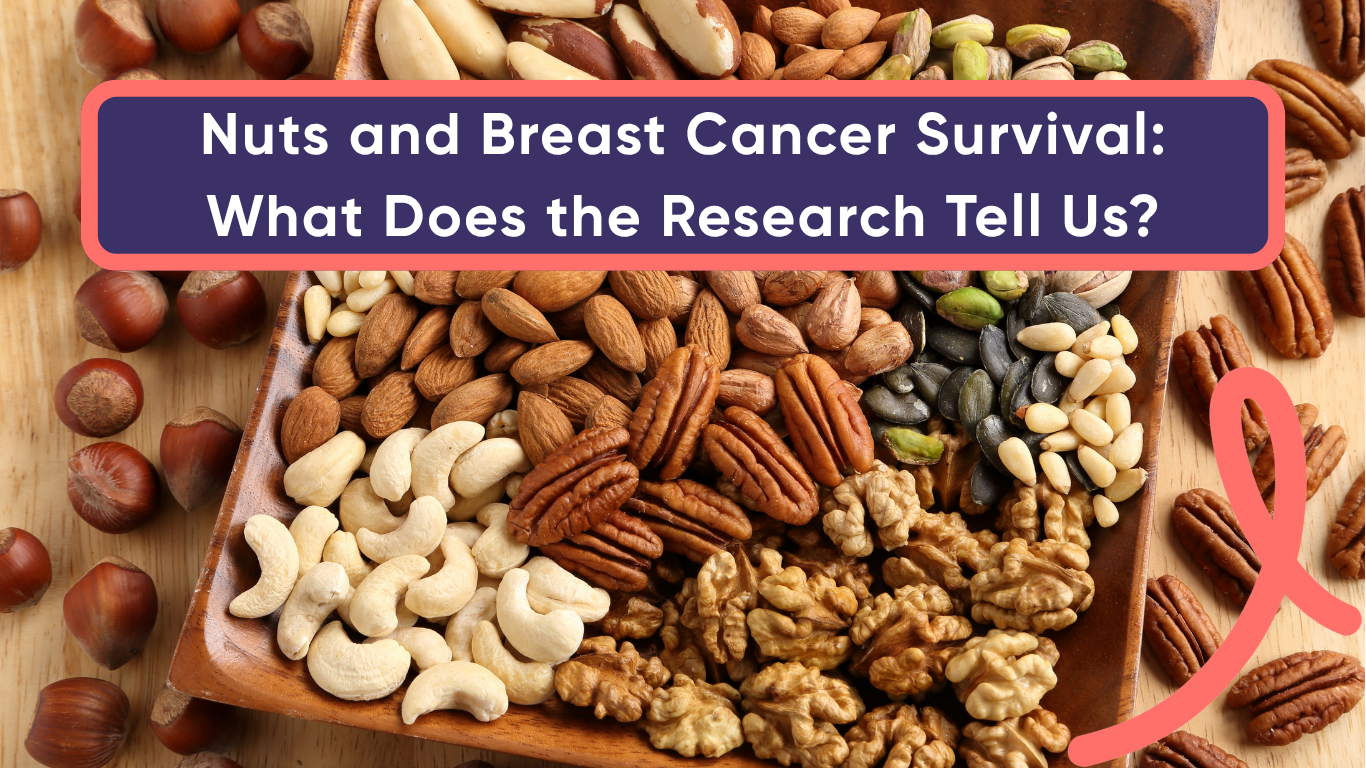
Breast cancer is the most common cancer among women worldwide, and although much less common, it can also affect men. While advances in screening and treatment have improved outcomes, maintaining a healthy lifestyle remains an important part of overall health before, during, and after cancer treatment. Research suggests that regular nut consumption may be associated with improved long-term outcomes among breast cancer survivors.
Connecting the Dots
Researchers from Vanderbilt University Medical Center and the Shanghai Municipal Center for Disease Control and Prevention found that nut consumption appeared to be associated with higher survival rates among long-term breast cancer survivors. Based on their findings, the researchers suggested that nut consumption may be considered a modifiable lifestyle factor for inclusion in survivorship recommendations.[1]
The team came to this conclusion after analyzing associations of peanut and tree nut consumption with overall survival (OS) and disease-free survival (DFS) among 3,449 long-term breast cancer survivors aged 20 to 75 years who participated in the Shanghai Breast Cancer Survival Study. Of these participants, 3,148 women reported nut consumption, and 301 women reported no nut consumption.
The researchers obtained a detailed dietary assessment, which the women completed at the 5-year post-diagnosis follow-up interview between October 2007 and October 2011. The team converted the consumption of nuts into grams per week and calculated total nut consumption as the sum of intake from peanuts, walnuts, and other nuts.
Here’s what they found
- Participants who consumed nuts regularly had higher rates of OS and DFS (by 4.7% and 7.9%, respectively) 10 years after diagnosis.
- There were positive associations of nut consumption with OS and DFS after a dose-response pattern for participants with greater-than-median (17.32 g per week) nut intake compared with non-consumers.
The team explained that nuts are a typical nutrient-dense food seen in healthy diets. As such, several studies have found nuts to be associated with reduced mortality, particularly mortality due to cardiovascular diseases, in the general population. Previously, we knew little about whether the health benefits of nut intake extended to breast cancer survivors, particularly regarding the DFS. The goal of this study was to address this knowledge gap. [2]
Which Nuts Should You Choose?
While the study specifically examined peanuts and walnuts, a variety of nuts provide valuable nutrients that support overall health.
- Walnuts have pedunculagin, a tannin that the body metabolizes into urolithins. Urolithins are compounds that bind to estrogen receptors and may play a role in preventing breast cancer.
- Brazil nuts contain the richest source of natural selenium, a nutrient that may play a critical role in reducing the risk of certain cancers
While no single food can prevent or treat cancer, research suggests that healthy dietary patterns may play an important role in supporting long-term health and cancer survivorship. [3]
Read More Cancer Prevention Information >>>
Source:
[1] https://onlinelibrary.wiley.com/doi/10.1002/ijc.33824
[3] https://www.nfcr.org/blog/nut-consumption-and-breast-cancer-survival/