I. Introduction
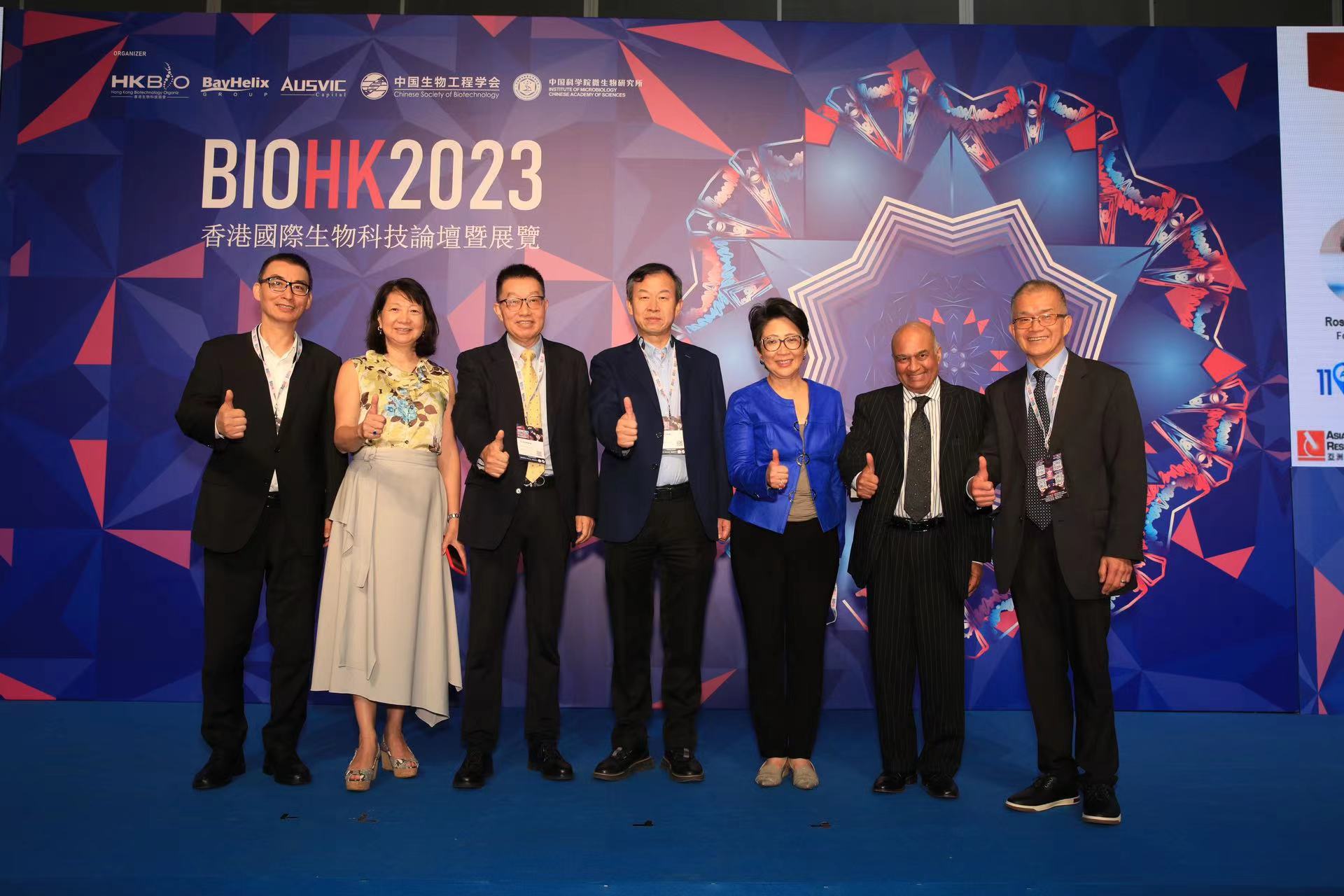
The Symposium on Cancer Research and Drug Development was organized by the Asian Fund for Cancer Research Limited (AFCR) and co-hosted with the Hong Kong Biotechnology Organization (HKBIO) on 14 September 2023 as part of the BIOHK2023 conference held at the Hong Kong Convention and Exhibition Centre.
BIOHK2023, convened from 13–16 September 2023 in Hong Kong, is one of Asia’s leading international biotechnology conventions, bringing together scientists, clinicians, entrepreneurs, investors, and policymakers to promote collaboration and innovation across the life sciences sector. Within this context, the AFCR symposium provided a focused platform dedicated to advancing cancer research and accelerating the translation of scientific discoveries into therapeutic development.
As a tax-exempt charitable organization registered in Hong Kong, AFCR supports innovative cancer research, particularly in malignancies prevalent among Asian populations, while fostering global scientific collaboration to improve patient outcomes. Through partnerships with HKBIO and international stakeholders, AFCR continues to strengthen an oncology ecosystem that bridges academia, industry, and investment communities.
The 2023 symposium convened distinguished researchers, clinicians, biotechnology leaders, and emerging oncology ventures to exchange insights on recent advances in cancer biology, translational science, and drug development. The program featured keynote addresses and expert discussions highlighting cutting-edge innovations in precision medicine and therapeutic strategy.
The symposium also showcased early-stage oncology enterprises, including recipients of AFCR’s BRACE Award Venture Competition, reflecting the organization’s commitment to advancing cancer drug development and supporting entrepreneurship alongside scientific discovery.
Held during a period of rapid progress in precision oncology, immunotherapy, and genomic medicine, the symposium underscored the importance of cross-sector collaboration in addressing the scientific and clinical complexities of cancer treatment. By bringing together leaders across disciplines and geographies, the event reinforced Hong Kong’s emerging role as a strategic bridge between Asia and the global biotechnology community.
II. Overview of the Current Landscape of Breast Cancer Genetics and Precision Oncology in Hong Kong
Prof. Ava Kwong, funded by AFCR from 2018 to 2020, presented a comprehensive overview of hereditary breast cancer research and its integration into clinical practice in Hong Kong. As a breast surgeon and academic at The University of Hong Kong (HKU), she outlined the scientific, technological, and clinical developments shaping precision oncology in the region.
Clinical Significance of Genetic Testing
- Germline mutation testing was emphasized as foundational to modern breast cancer management. Identification of pathogenic variants enables:
- Assessment of individual and familial cancer risk
- Implementation of preventive interventions, including risk-reducing surgery
- Tailored surveillance strategies
- Selection of targeted therapies
Targeted approaches, including the use of PARP inhibitors for BRCA-associated malignancies, were discussed as examples of how molecular understanding informs therapeutic decision-making.
DNA Repair Mechanisms and BRCA-Associated Tumorigenesis
BRCA1 and BRCA2 mutations impair homologous recombination repair, leading to genomic instability and increased cancer susceptibility. BRCA deficiency may arise from:
- Germline mutations
- Somatic alterations
- Epigenetic modifications
These insights have directly informed risk stratification models and targeted therapeutic development.
Establishment of a Hereditary Breast Cancer Registry
The Hong Kong Hereditary Breast Cancer Family Registry, established in 2007, functions as:
- A genetic counseling and testing platform
- A research database and biobank
- A charitable support organization for high-risk families
Data presented indicated:
- Over 4,800 high-risk families enrolled
- BRCA1/2 mutation carriage of approximately 10.9%
- Expanded multigene testing increasing detection to 15.2%
These findings underscore the importance of comprehensive genetic profiling beyond BRCA1/2 alone.
Advances in Sequencing Technology
Transition from single-gene testing to multigene panel sequencing has improved mutation detection rates. Panels including up to 93 genes increase yield beyond BRCA1/2 by approximately 3.3%.
Long-read sequencing platforms, including nanopore-based systems, enhance detection of structural variants and large genomic rearrangements, reducing the likelihood of missed pathogenic alterations.
Translational Impact
Surveillance data from high-risk mutation carriers demonstrated:
- Approximately 30% of new cancers detected through monitoring programs
- Around 80% diagnosed at early stage
- Detection rates of 25.4 per 1,000 screened versus 2.3 per 1,000 in population screening
These outcomes illustrate the effectiveness of risk-stratified surveillance. However, broader implementation remains constrained by limited public funding and resource allocation.
III. Overview of Early Detection Strategies for Hepatocellular Carcinoma
In a keynote address, Prof. Yu Wang (Chairman, Chinese Foundation for Hepatitis Prevention and Control) examined hepatocellular carcinoma (HCC) as a major global health burden, particularly in regions with high prevalence of chronic hepatitis B virus (HBV) infection.
HCC progression typically follows a predictable sequence:
- Chronic HBV infection
- Chronic hepatitis
- Fibrosis
- Cirrhosis
- Hepatocellular carcinoma
Because high-risk individuals can be clinically identified, structured surveillance offers significant potential for early detection.
Long-term antiviral therapy was presented as an effective cancer prevention strategy, reducing progression to cirrhosis and lowering HCC incidence. Nevertheless, insufficient screening and treatment coverage remain major obstacles.
Early-stage detection enables curative interventions such as surgical resection or local ablation, whereas advanced-stage diagnosis significantly limits therapeutic options.
Strengthened surveillance through ultrasound, alpha-fetoprotein testing, and structured follow-up within liver clinics was proposed as essential to achieving global mortality reduction targets.
IV. Investment Trends and Globalization of Oncology Innovation
A dedicated session examined the rapid evolution of China’s healthcare investment landscape, particularly in oncology innovation.
China’s transformation into the world’s second-largest healthcare market has been driven by demographic change, expanding R&D capacity, and supportive policy frameworks. Increasingly, domestically developed oncology therapies are being licensed internationally, reflecting maturation of innovation pipelines.
Accelerated areas of development include:
- Oncology drug discovery
- Cross-border licensing
- AI-enabled platforms
- mRNA technologies
- Cell therapies and biologics
- Advanced medical devices
Hong Kong’s position as a biotechnology and capital markets hub was highlighted as strategically important in linking Mainland China’s innovation ecosystem with global investment networks.
V. Advances in Biofoundry and Engineering Biology
Prof. Akihiko Kondo from Kobe University presented emerging biofoundry platforms and engineering biology approaches were presented as transformative tools for biopharmaceutical research.
Key innovations include:
- AI-driven design-build-test cycles
- Genome engineering
- Automated protein and cellular experimentation
- Scalable microbiome modeling
These integrated systems aim to shorten development timelines, enhance reproducibility, and enable sustainable biotechnology applications.
VI. Transforming Cancer Care: From Surgery to Precision Medicine and AI-Driven Therapies
Prof. Raju Kucherlapati from Harvard Medical School presented and explored in depth the evolution of cancer therapy from conventional modalities to molecularly guided treatment..
Identification of genetic drivers such as BRCA mutations and chromosomal translocations enabled development of targeted therapies. Precision oncology now classifies tumors by molecular characteristics rather than tissue origin.
Advances in genome sequencing, cancer atlases, 3D protein modeling, gene editing, and antibody-drug conjugates are accelerating therapeutic discovery. AI-driven analytics further enhance patient stratification and drug development.
These innovations collectively signal a paradigm shift in oncology, with improved personalization and survival outcomes.
VII. Transforming Liver Cancer Care in China
Prof. Ming Kuang, from Sun Yat-sen University presented a comprehensive HCC program, integrating multidisciplinary care, multi-point tumor sampling, and large-scale clinical databases.
Research into tumor heterogeneity has revealed distinctions between primary, recurrent, and de novo tumors, informing tailored treatment strategies.
Combination immunotherapy and anti-angiogenic therapy demonstrated improved survival in advanced HCC, with some initially unresectable cases converted to surgical candidates.
AI-based imaging models are being developed to predict recurrence risk and guide personalized therapeutic decisions.
VIII. Leadership Recognition at BIOHK2023
During the opening ceremony of BIOHK2023, Dr. Sujuan Ba, President and CEO of AFCR, received the inaugural Leadership Award for Global Advocate of Cancer Research from the Hong Kong Biotechnology Organization.
The award recognizes sustained contributions to advancing cancer research, detection, and therapeutic innovation globally. This recognition reflects Dr. Ba’s longstanding commitment to strengthening international collaboration and accelerating translational oncology. Read more…
IX. Select Showcase of Emerging biotech companies from Asia
1. Dr. Lily Zou Receives the BRACE Award on Behalf of Degron Therapeutics
During the symposium, Dr. Sujuan Ba presented the BRACE Award to Dr. Lily Zou, Chief Executive Officer of Degron Therapeutics, in recognition of the company’s innovative contributions to targeted protein degradation technologies in oncology. Read more…
In accepting the award, Dr. Zou outlined Degron Therapeutics’ work in molecular glue degraders — an emerging therapeutic modality designed to induce selective degradation of disease-driving proteins, including targets historically considered “undruggable.” Unlike traditional inhibitors, molecular glues promote proximity between target proteins and E3 ubiquitin ligases, resulting in proteasomal degradation.
The company has developed a proprietary discovery platform incorporating a structurally diverse compound library, high-throughput screening technologies, and validation systems to accelerate candidate identification. Integration of computational modeling and artificial intelligence supports rational design and optimization of degrader molecules.
Preclinical data presented during the symposium demonstrated dose-dependent activity across cellular and animal models, including potential synergy with established targeted therapies. These findings suggest that targeted protein degradation may represent a complementary strategy within precision oncology.
The BRACE Award highlights the growing importance of novel drug modalities in expanding the therapeutic landscape for cancer treatment.
2. DotBio: Advances in Multifunctional and Intracellular Antibodies
A presentation by Dr. Ignacio Asial, DotBio’s Founder & CEO, detailed the company’s platform approach to multifunctional antibody engineering. The discussion emphasized the limitations of conventional monoclonal antibody development, including high attrition rates in clinical translation.
DotBio’s strategy centers on modular antibody design, enabling the assembly of bispecific, trispecific, and other multifunctional constructs through prefabricated antibody domains targeting tumor cells, immune effector cells, and components of the tumor microenvironment. This modular framework allows parallel testing of multiple configurations, potentially accelerating optimization and reducing late-stage development risk.
The company also described early-stage research into intracellular antibodies — an area historically constrained by delivery challenges. Preliminary in vitro findings indicate potential inhibition of cancer cell growth through intracellular targeting of transcriptional regulators.
DotBio, originating from academic research collaborations, applies proprietary stabilization technologies and fully in vitro human-derived domain antibody libraries to support rapid prototyping and data-driven candidate selection. Ongoing development efforts reflect broader industry interest in expanding antibody-based strategies beyond traditional extracellular targets.
3. Ascentage Pharma: Global Progress in Targeted Cancer Therapies
Dr. Dajun Yang, Cofounder and former Chief Medical Officer of Ascentage Pharma, presented the company’s advances in targeted oncology therapeutics, with particular focus on resistant chronic myeloid leukemia (CML) and BRAF-mutated malignancies.
Clinical data were discussed for a third-generation BCR-ABL inhibitor developed for patients with resistance or intolerance to prior therapies. Reported findings indicated promising cytogenetic response rates and a favorable safety profile, suggesting potential benefit in difficult-to-treat patient populations.
Additional pipeline programs include BRAF inhibitors designed for enhanced central nervous system penetration, with early data demonstrating activity in solid tumors, including cases involving brain metastases. The company’s broader portfolio encompasses small-molecule and mRNA-based strategies across multiple indications.
Dr. Yang emphasized the importance of integrated research and development capabilities, international clinical trial networks, and cross-border regulatory engagement in advancing oncology innovation. Ascentage Pharma’s expanding global footprint reflects the increasing internationalization of precision medicine development.
X. Conclusion: Accelerating Translational Oncology Through Global Collaboration
The AFCR Symposium at BIOHK2023 demonstrated the convergence of scientific discovery, technological innovation, and entrepreneurial translation in modern oncology.
Across sessions, precision medicine emerged not as an aspirational concept but as an operational framework. Advances in genomic profiling, molecular therapeutics, immuno-oncology, and AI-driven platforms are reshaping how cancers are detected and treated.
Asia’s expanding role in global oncology innovation was evident throughout the symposium. Hong Kong’s unique position as a bridge between Mainland China and international markets reinforces its strategic importance in the global biotechnology landscape.
Through funding innovation, fostering entrepreneurship, and cultivating international partnerships, AFCR continues to catalyze progress in cancer research. The symposium reaffirmed that sustained collaboration, scientific rigor, and translational focus are essential to addressing the complex challenges of cancer care.
About the AFCR
The Asian Fund for Cancer Research Limited (AFCR) is a nonprofit organization dedicated to advancing cancer research and improving patient outcomes across Asia and globally. Founded to accelerate the development of innovative therapies, AFCR focuses on supporting early-stage scientific discoveries, translational research, and clinical development in oncology.
Its mission is to drive breakthroughs in cancer treatment by funding promising research, facilitating collaborations between academic institutions, biotech companies, and pharmaceutical partners, and helping translate laboratory discoveries into real-world therapies. AFCR places a strong emphasis on patient-centered innovation, aiming to address unmet medical needs, particularly for hard-to-treat cancers.
Beyond funding, AFCR also nurtures scientific talent and entrepreneurship, supporting researchers and innovators in developing novel therapies that can reach patients safely and efficiently. By combining research support, strategic guidance, and global partnerships, AFCR plays a pivotal role in accelerating progress in cancer therapy development.
Download the BIOHK2023 Highlights Report