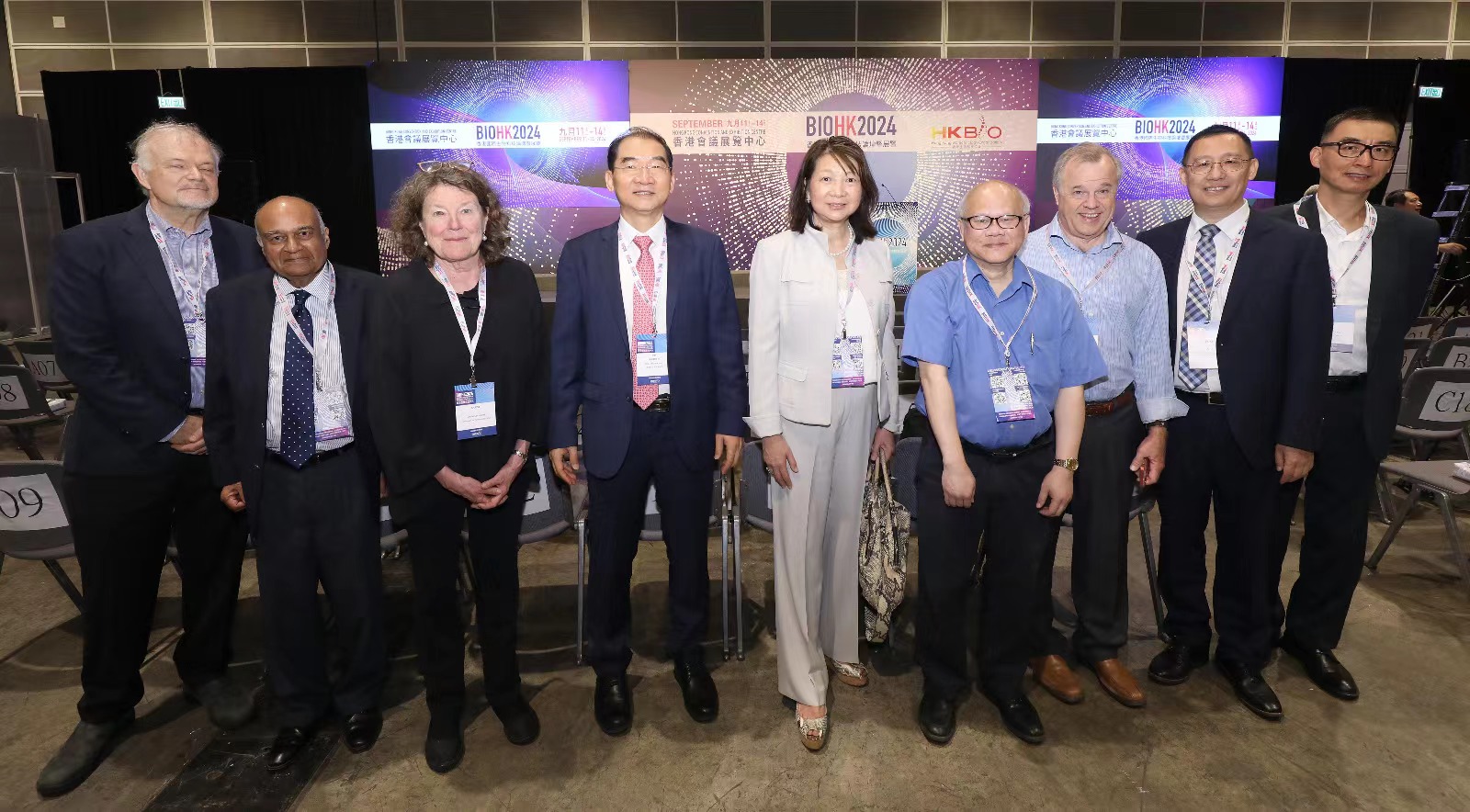
On 12–13 September 2024, the Asian Fund for Cancer Research Limited and City University of Hong Kong convened the AFCR–CityU Symposium on Precision and Digital Medicine as part of BIOHK2024 at the Hong Kong Convention and Exhibition Centre.
This symposium was designed to provide a focused, high-level platform examining the convergence of precision medicine and digital innovation in oncology and biomedical science. As global healthcare systems increasingly integrate molecular diagnostics, artificial intelligence, and data-driven clinical tools, the need for interdisciplinary collaboration between scientists, clinicians, technologists, and industry leaders has become more urgent. The AFCR–CityU Symposium addressed this intersection directly by highlighting translational strategies that bridge laboratory discovery, computational medicine, and real-world clinical implementation.
Throughout the program, speakers explored advances in genomics, biomarker discovery, digital pathology, AI-supported analytics, and computational modeling. The discussions highlighted how biological science and digital technology are shaping next-generation oncology, while reinforcing AFCR’s commitment to advancing innovative cancer research and helping translate scientific discoveries into meaningful benefits for patients.
Read the Full BIOHK2024 Highlights
Connecting Scientific Discovery with Patient Impact
Opening the program, Dr. Sujuan Ba, Founder and CEO of the Asian Fund for Cancer Research Limited, emphasized that progress in cancer research depends on sustained collaboration among scientists, clinicians, research institutions, biotechnology companies, investors and other partners.
Scientific discoveries often begin with fundamental research, but their journey toward patient benefit can require years of additional investigation, clinical testing, financing and regulatory development. Dr. Ba highlighted the importance of creating stronger connections across these stages so that promising ideas do not remain confined to the laboratory.
The symposium brought together leading experts in precision medicine and digital health from the United States and Asia to exchange best practices across cancer, cardiovascular disease, and other major health challenges. Dr. Ba underscored that such dialogue is not merely academic—it represents a critical inflection point for advancing innovative therapies and overcoming systemic barriers in drug development.
As founder of AFCR, she reiterated her belief that meaningful progress in cancer research requires synergy across basic science, translational research, and clinical application. By aligning stakeholders across sectors and geographies, Asia can play a transformative role in delivering breakthrough medicines to the world.
Professor Mengsu “Michael” Yang, Senior Vice-President for Innovation and Enterprise at CityU, similarly emphasized the value of integrating academic research, clinical application and entrepreneurship. He described data integration as an important next step in precision medicine: combining genomic, clinical, pathological, and therapeutic information into large-scale databases capable of guiding real-time clinical decisions. Such systems would allow physicians to match new patients with evidence derived from thousands of similar cases – ushering in a truly data-driven era of medicine.
Using Molecular Insights to Understand Cancer More Precisely
One of the symposium’s central themes was that cancers carrying the same traditional diagnosis may have very different molecular characteristics. Identifying these differences can help researchers classify diseases more accurately and investigate treatments tailored to the biology of each tumor.
Professor Hai Yan of A*STAR described how the discovery of mutations in the IDH1 and IDH2 genes transformed the understanding of glioma. His work helped demonstrate that glioma is not one uniform disease, but a collection of biologically distinct tumor types.
These molecular discoveries contributed to changes in international brain-tumor classification and supported the development of targeted treatments for certain IDH-mutant gliomas. Professor Yan’s presentation illustrated how a genetic finding made in the laboratory can ultimately influence diagnosis, clinical-trial design and treatment.
Professor Yizhou Jiang of Fudan University Shanghai Cancer Center presented a decade-long effort to improve the treatment of triple-negative breast cancer through molecular subtyping.
Triple-negative breast cancer does not express the estrogen receptor, progesterone receptor or HER2, limiting the usefulness of several commonly used breast-cancer treatments. However, Professor Jiang’s research shows that triple-negative breast cancer is itself made up of multiple biologically distinct subtypes.
Her team has investigated how these subtypes may respond differently to chemotherapy, targeted drugs, immunotherapy and combination approaches. The researchers have also developed more practical classification methods using immunohistochemistry, medical imaging, digital pathology and machine learning.
This work demonstrates how molecular profiling and artificial intelligence may help move breast-cancer care away from a uniform treatment model and toward more individualized strategies.
Exploring New Options for Rare and Difficult-to-Treat Cancers
Charles Hu, Vice President of the conference, chaired a session focused on precision oncology for rare and high-risk cancers. In introducing the session, he emphasized the profound effects that cancer can have on patients and their families and the need for more precise approaches where conventional treatment options remain limited.
He introduced Professor Daniel Johnson of the University of California, San Francisco, who presented research on head and neck squamous cell carcinoma associated with Fanconi anemia.
Fanconi anemia is a rare inherited DNA-repair disorder. Patients who develop head and neck cancer may be unusually sensitive to radiation and DNA-damaging chemotherapy, leaving them with few viable treatment options.
To investigate potential alternatives, Professor Johnson and his collaborators developed patient-derived tumor models. These models allowed the researchers to analyze the molecular characteristics of individual tumors, test potential treatments and identify vulnerabilities involving pathways such as EGFR, PI3K and BCL2.
The work demonstrates how molecular profiling and patient-derived models can help researchers study rare cancers that would be difficult to examine through conventional large clinical trials.
Professor Min Li of the University of Oklahoma Health Sciences Center discussed research targeting ZIP4, a zinc transporter found at elevated levels in pancreatic cancer.
His team’s studies suggest that ZIP4 may contribute to tumor growth, metastasis, treatment resistance and changes in tumor metabolism. These findings make ZIP4 a potential biomarker and therapeutic target for a cancer that remains particularly difficult to detect and treat.
Professor Li also discussed cancer cachexia, a severe muscle-wasting condition commonly experienced by people with pancreatic cancer. His research explores how tumors communicate with muscle tissue and how ZIP4 may contribute to this damaging process.
The presentation highlighted the need to understand pancreatic cancer not only as a tumor, but also as a systemic disease that can affect metabolism, strength and a patient’s ability to tolerate treatment.
Applying AI and Genomics to Cancer Evolution
Cancer is not static. Tumors can change over time, particularly after exposure to treatment, and the molecular characteristics of a recurrent cancer may differ from those of the original tumor.
Professor Jiguang Wang of the Hong Kong University of Science and Technology presented research that combines genomics, applied mathematics, computational biology and artificial intelligence to study how tumors evolve.
By analyzing tumor samples collected over time, his team has identified molecular changes associated with recurrence and treatment resistance. The researchers have also developed computational models intended to forecast tumor progression and patient prognosis.
This work suggests that precision oncology may eventually consider not only the current characteristics of a tumor, but also how it is likely to change in the future.
Wen Luo of Denovo Biopharma presented another application of precision genomics: identifying genetic biomarkers that may distinguish patients who respond to a treatment from those who do not.
A medicine may appear unsuccessful when tested across a broad patient population even though a smaller, molecularly defined group receives meaningful benefit. By examining genomic information from clinical-trial participants, researchers may be able to identify these responder groups and design new biomarker-guided studies.
His presentation reinforced a central principle of precision medicine: the success of a treatment may depend on matching it with the right patients.
Advancing Earlier Detection Through Liquid Biopsy
Earlier detection can greatly expand the treatment options available to cancer patients. Professor Zongli Zheng of City University of Hong Kong presented research into liquid-biopsy methods for detecting liver cancer through tumor-related DNA circulating in the blood.
Rather than relying on one mutation, his team is examining several characteristics of circulating DNA, including telomere-related changes, genome-wide fragmentation patterns and copy-number alterations.
The researchers are investigating whether these combined signals could help detect liver cancer before clinical diagnosis, monitor changes following surgery and provide information about prognosis.
Although further validation is needed before these approaches can be used for widespread screening, the research demonstrates the potential of non-invasive blood tests to support earlier detection and more precise disease monitoring.
Bridging Research and Cancer Entrepreneurship
Scientific discoveries cannot benefit patients unless they can be developed, tested, manufactured and made accessible.
During the program on bridging academic research and cancer entrepreneurship, Dr. Sujuan Ba emphasized three essential elements for building successful biotechnology ventures: innovative science, strong leadership and sufficient funding.
The session explored how researchers can move discoveries from academic laboratories toward new technologies, companies and treatments. It also highlighted the value of mentorship, professional networks and partnerships in helping emerging scientist-entrepreneurs navigate the long and uncertain path of biotechnology development.
Professor Raju Kucherlapati of Harvard Medical School reflected on his experience helping establish and guide biotechnology companies based on advances in genetics, genomics and drug development.
He emphasized that successful biotechnology entrepreneurship requires patience, scientific and leadership talent, resilience during periods of financial uncertainty, disciplined focus and the flexibility to recognize new opportunities. While biotechnology companies can create significant economic value, he stressed that their most meaningful achievement is developing medicines that improve and save patients’ lives.
The program also provided a platform for emerging biotechnology and health-technology companies. Eleven CityU HK Tech 300 teams presented innovations spanning diagnostics, digital health, drug delivery, artificial intelligence, rehabilitation, environmental monitoring and other fields. Their participation demonstrated the breadth of Hong Kong’s growing biotechnology ecosystem and the importance of creating pathways through which promising technologies can reach practical development.
Advancing Cancer Innovation Through Collaboration
The AFCR–CityU programs at BIOHK2024 demonstrated how molecular science, artificial intelligence, early-detection research and biotechnology entrepreneurship are becoming increasingly connected.
Across the presentations, one message remained consistent: scientific discovery alone is not enough. Researchers, clinicians, entrepreneurs, funders and industry partners must work together to move promising ideas through development and toward patient benefit.
By convening experts across disciplines and regions, AFCR continues to foster the collaborations needed to advance innovative cancer research and strengthen Asia’s contribution to global biomedical progress.
Read the Full BIOHK2024 Highlights