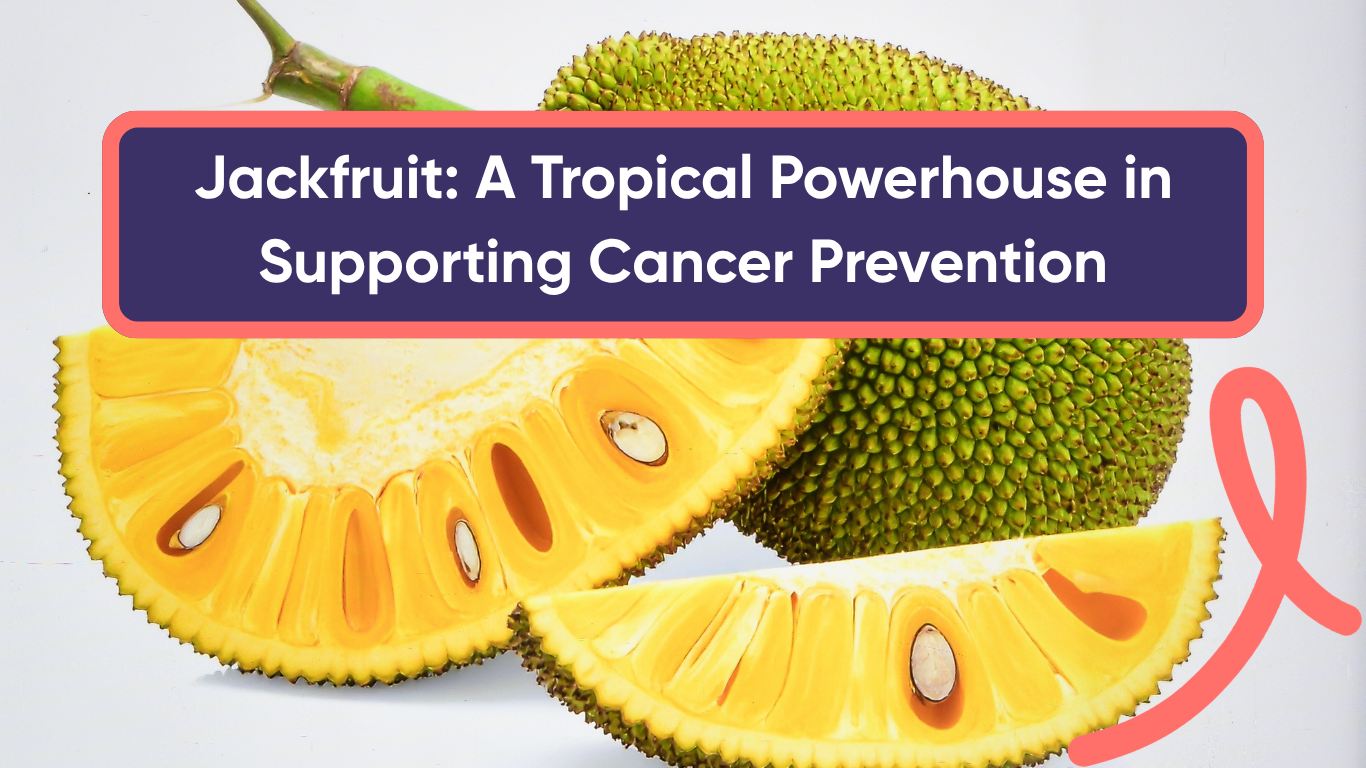
Jackfruit is the largest tree fruit in the world and can be found in tropical regions such as Southeast Asia, India, and Brazil. With its spiky exterior, jackfruit contains sweet and aromatic flesh that has made it a favorite tropical fruit for many people. Beyond its delicious taste, jackfruit provides a variety of nutrients, including vitamins, minerals, phytonutrients (phytochemicals), and dietary fiber. With its rich nutrition, jackfruit can lower the risk of cancer. Here’s why.
Phytonutrients (Phytochemicals)
One of the most significant substances in jackfruit is Phytonutrients (phytochemicals), which play a crucial role in reducing cancer risk. Research has shown phytonutrients hold anti-inflammatory and antioxidant properties that protect cells from damage caused by the highly reactive, unstable molecules known as “free radicals.” [1] Jackfruit is rich in phytonutrients, including lignans, isoflavones, saponins, flavonoids, and carotenoids, all of which contribute to its cancer-fighting capabilities.
Vitamins
Jackfruit is rich in vitamin C, A, and several B vitamins, all of which play important roles in cancer prevention. Vitamin C provides powerful antioxidant properties, protecting cells from damage caused by free radicals, which contribute to cancer development. Vitamin A helps maintain healthy vision, immune function, and skin health, and reduces oxidative stress, lowering the risk of cellular damage that can lead to cancer. B vitamins, such as riboflavin, folate, and niacin, support cell repair, DNA synthesis, and the production of red and white blood cells, reducing the risk of various types of cancer. [2]
Minerals
Jackfruit is also a good source of essential minerals like potassium, magnesium, and calcium, which contribute to its cancer-fighting properties. Potassium helps maintain cellular function and electrolyte balance. Magnesium is crucial for nerve cell communication, muscle contraction, and DNA repair. Studies have shown that adequate magnesium intake is associated with a lower risk of colorectal cancer and may help reduce the risk of other cancers. [3] While not as abundant, calcium in jackfruit supports bone health and can help prevent cancer growth.
Fiber
Jackfruit is rich in dietary fiber, which supports healthy digestion and metabolism. A diet high in fiber has been associated with a lower risk of obesity, a major risk factor for several types of cancer.
A Healthy Addition to Your Diet
While no single food can prevent cancer, incorporating jackfruit into a balanced diet allows you to benefit from its rich nutritional profile. Combined with other healthy lifestyle choices, including regular physical activity and maintaining a healthy weight, consuming a variety of fruits and vegetables may help support overall health and reduce cancer risk.
Source:
[3] https://pubmed.ncbi.nlm.nih.gov/22854408/
[4] https://www.nfcr.org/blog/jackfruit-a-tropical-powerhouse-in-fighting-against-cancer/