Healthy food choices can play an important role in supporting overall health and reducing cancer risk. What you eat and what you don’t eat can have a powerful effect on your health. Maintaining a healthy weight and nourishing your body with the right foods are key to good health and cancer prevention.
Although there is no single diet program that is right for everyone, it is important to have some sort of healthy-eating plan. Here are several cancer prevention strategies to keep in mind.
1. Know Your Healthy Weight and Maintain It
People who are overweight or obese have a higher risk of many serious health conditions, including cancer. To control weight gain, it is important to know what weight is healthy for you and to maintain that weight. A few pounds here or there should not lead to extreme dieting, but knowing yourself and your ideal body weight is key.
Maintaining a healthy weight throughout life can lower your risk of breast, uterine, prostate, lung, colon, kidney, pancreatic, esophageal, multiple myeloma, gallbladder, gastric, ovarian, and thyroid cancers.
2. Replace One Processed Item a Day with Real Food
Processed foods are not just microwavable meals. The term “processed food” applies to foods that have been altered from their natural state in some way, whether for safety, appearance or convenience. Ingredients such as salt, sugar, and fat are often added to processed foods, which can lead to consuming more of these additives than recommended.
A few simple swaps can make a big difference in how you look and feel—and may also help lower your risk of cancer.
- Grab an apple or an orange instead of cookies.
- Substitute cucumbers and baby carrots for chips.
- Replace soda with a glass of water or sparkling water. Water helps your body get rid of toxins that put you at risk for diseases like cancer.
3. Add Nutrient-Rich Foods to Your Diet
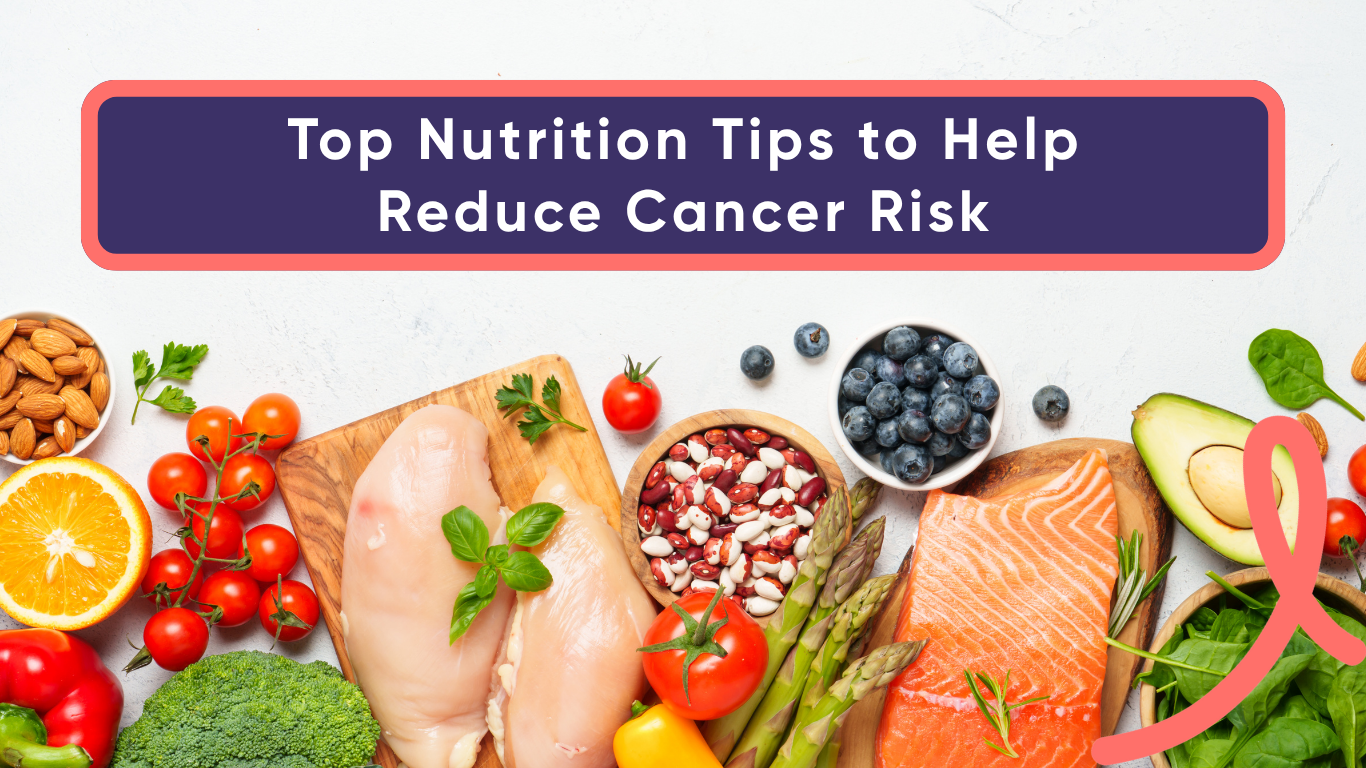
Superfoods are nutrient powerhouses that contain large doses of cancer-fighting antioxidants, vitamins and minerals.
- Add dark green vegetables like spinach, broccoli, and kale to your diet.
- Snack on a handful of raw almonds or nuts instead of a bag of chips.
- Check out some of our favorite cancer-fighting foods that contain superfoods.
4. Limit Red and Processed Meats
Research shows that people who eat more red meat, such as beef, pork, and lamb, and processed meats, such as bacon, sausage, hot dogs, and salami, may have a higher risk of developing colorectal cancer.
Although the exact mechanisms are still being studied, the observed increased risk may be related to the high iron and fat content in red meat, as well as the salt and nitrates in processed meat. Additionally, cooking meat at very high temperatures can create chemicals that may increase cancer risk.
Consider replacing some red meat with fish, chicken, beans, tofu, or other plant-based protein sources as part of a balanced diet.
5. Reduce Alcohol Intake
Although moderate alcohol use has been associated with possible health benefits in some studies, alcohol is not risk-free. Excessive use can cause liver damage, heart problems, and increase the risk of certain cancers.
To help reduce your lifetime risk of cancer, it is best to limit alcohol intake. We recommends: on average, men should not consume more than 2 drinks per day and women should not consume more than 3 drinks per week
Explore our website for trusted information on cancer prevention, nutrition, and healthy living.
Source:
https://www.nfcr.org/blog/top-nutrition-tips-cut-cancer-risk/