Accelerating Patient Identification for Targeted Cancer Therapies
The Challenge: A Critical Gap in Precision Oncology
For many of the most serious and difficult-to-treat cancers, significant advances have been made in developing new therapies. However, a major challenge remains: identifying the patients who are most likely to benefit from these treatments in a timely and reliable manner.
Current biomarker testing approaches often rely on complex genomic analyses that can be time-consuming, costly, and not universally accessible. As a result, treatment decisions may be delayed, and some patients who could benefit from targeted therapies may not be identified.
At the same time, clinical development has continued to advance, with new therapies and improved trial designs accelerating progress. With AFCR’s leadership and support, important strides have been made in advancing cancer research and enabling more efficient evaluation of emerging treatments. However, these advances still depend on the ability to rapidly and accurately identify appropriate patients.
This highlights a broader challenge across oncology: progress in therapeutics is increasingly outpacing improvements in patient identification. Addressing this gap—through faster, more accessible, and more informative biomarker assessment—is essential to ensuring that scientific advances translate into meaningful patient benefit.
Many patients who could benefit from targeted cancer therapies are not identified in time. Current biomarker testing can be slow, costly, and incomplete. We need a faster and more accessible way to match patients with the treatments that may help them most.
The Answer: AI-Enabled Biomarker Identification Platform
This AFCR-supported initiative focuses on advancing a novel approach to improve how clinically relevant biomarkers are identified, enabling more efficient patient selection for targeted cancer therapies.
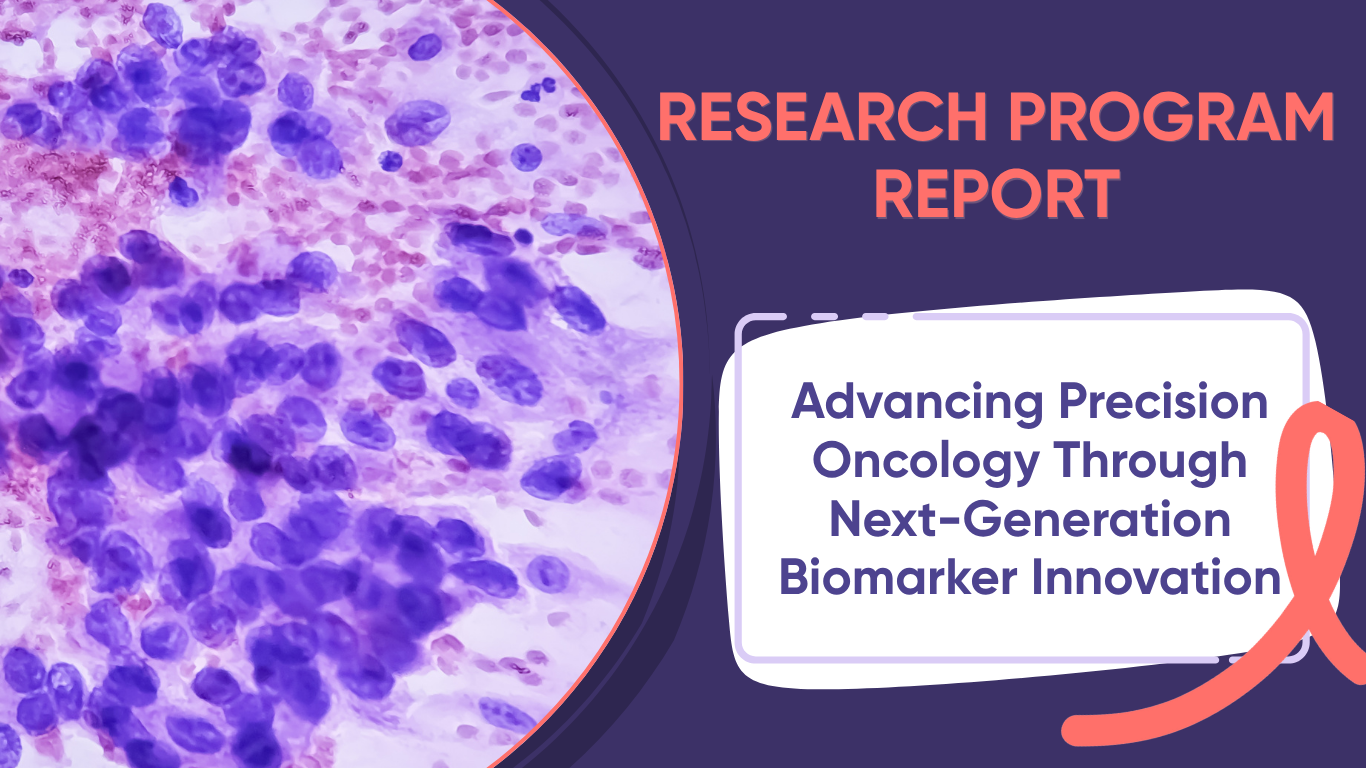
Critically, this approach applies artificial intelligence to analyze routine pathology slides, allowing for rapid detection of biomarker signals directly from standard tissue samples. By leveraging large-scale clinical data and advanced computational methods, it enables more timely and informed treatment decisions. Integrated within existing clinical workflows, this approach supports scalable implementation and complements current testing strategies.
It helps improve the identification of patients who may benefit from targeted therapies, reduces delays in care, and enhances overall efficiency in clinical decision-making.
Each application of this approach is developed with consideration of the biological and clinical context of the disease under evaluation, supporting both scientific rigor and clinical relevance. Ongoing validation across multiple datasets and institutions is intended to further assess robustness and reproducibility.
With initial development supported through global collaborations, this effort leverages established clinical infrastructure, data resources, and translational research networks. It is expected to expand across multiple cancer types and healthcare systems, contributing to a more efficient and accessible precision oncology ecosystem.
The Progress: From Research to Validation
Supported by a network of scientific, clinical, and translational collaborators, this initiative has progressed from early research toward broader validation and real-world application:
- Peer-reviewed research has demonstrated the feasibility of inferring clinically relevant biomarker signals from routine pathology slides, supported by large-scale, multi-institutional datasets.
- Ongoing validation studies are being conducted across multiple independent cohorts and cancer types to further assess performance and generalizability.
- Strategic collaborations with academic medical centers and clinical partners have been established to support real-world evaluation and workflow integration.
- Regulatory strategy development is underway, informed by emerging frameworks for AI-enabled diagnostic tools and recent precedents in digital pathology.
- Data partnerships and translational research efforts are expanding to support future clinical validation, regulatory submission, and broader adoption.
How You Can Help: Join Us in Advancing Precision Oncology
The need to improve patient identification in cancer care is urgent. Many patients still face delays in getting the right treatment due to limits in current testing.
We are seeking support to move this work forward, including:
- Supporting clinical validation and data collection
- Working with clinical and research partners
- Advancing regulatory development and implementation
- Expanding application across multiple cancer types
Your contribution helps advance precision oncology, fund scientific breakthroughs, launch clinical trials, and bring hope to patients and families facing the toughest diagnoses.
Together, we can turn discovery into cures—and bring lifesaving treatments to those who need them most.